Respirable crystalline silica
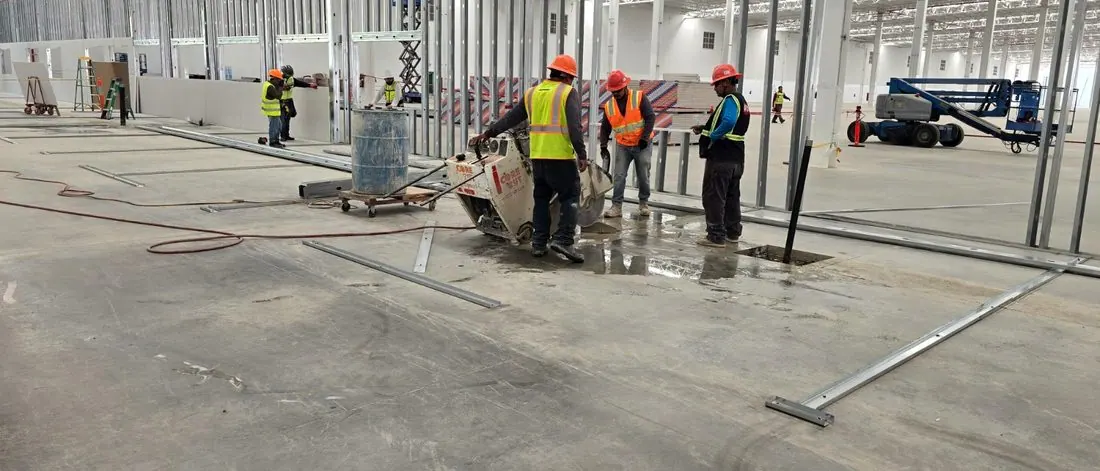
Concrete dust contains crystalline silica, and its effect on the lungs is cumulative and irreversible. You do not feel it at the time; it shows up years later.
It is controlled at source: wet cutting whenever possible, and high-efficiency filtered extraction when the cut has to be dry. A respirator is the last barrier, not the first, and it only works if it is the right one and properly fitted.
Stored energy and piece movement
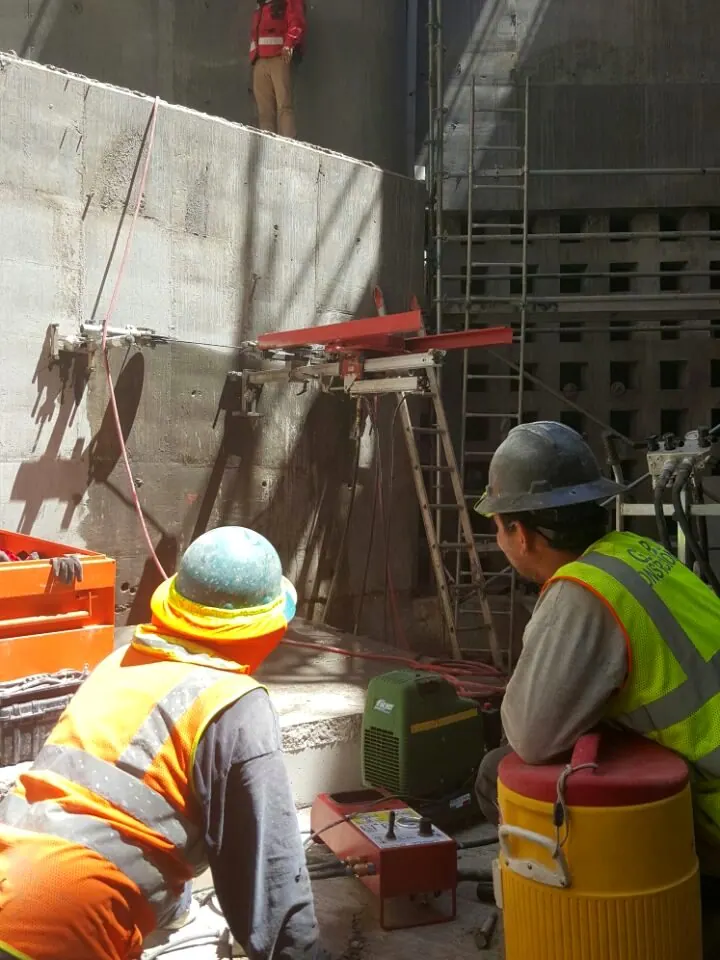
The serious accident in structural cutting almost always has the same shape: the piece moves before anyone expects it. It may have been in compression, the cut may have released a restraint, or simply nobody secured it.
The control is procedural: secure or shore before the final cut, define the rigging point before starting, and allow nobody under the piece or in its fall path.
Water and electricity together
Wet cutting puts water around electrical equipment. It is resolved with residual-current protection, cables in good condition kept off the wet floor, and connections outside the run-off zone. It is not optional and does not tolerate improvised extension leads.
Work at height and confined spaces
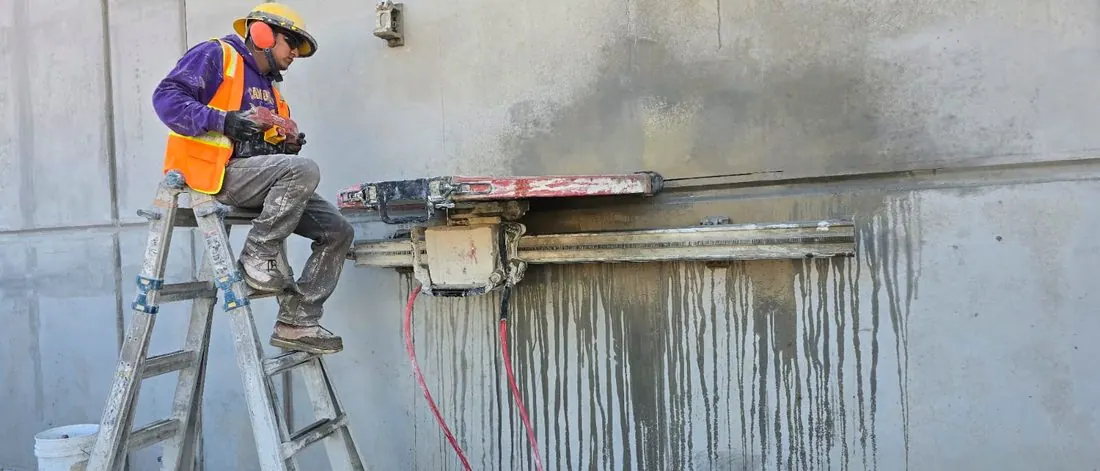
Much wall and facade cutting happens on scaffold or lifts, and much drilling happens in pits and chambers. Both scenarios have their own procedures: a harness with a calculated anchor point, and in confined spaces, atmosphere testing and an attendant outside.
It is also what export plants check before granting a contractor access. Complying is not only protection: it is an entry requirement.