They are 2 different things
Mechanical polishing works the concrete itself: it closes the pore with progressive grits until the surface reflects by density. There is no added layer, so there is nothing to delaminate.
An epoxy coating adds a film over the slab. It gives uniform colour, a chemical barrier and full sealing, but it is a layer: it scratches, wears in traffic lanes, and one day it has to be replaced.
When polishing wins
When the slab is sound, well levelled and the aggregate is presentable. When use is foot or forklift traffic without chemical spills. When you want a floor that lasts years without replacement and you accept the natural variation of concrete.
In warehouses, showrooms, retail and industrial offices it is almost always the better ten-year economic decision.
When epoxy wins
When there is chemical exposure, when uniform colour or area marking is required, when the slab is deeply oil-stained, or when an impermeable barrier is needed — food, pharmaceutical, workshops with fluids.
Also when the slab is in poor condition: if the concrete is cracked or the aggregate is poor, polishing only puts the problem on display.
What both share
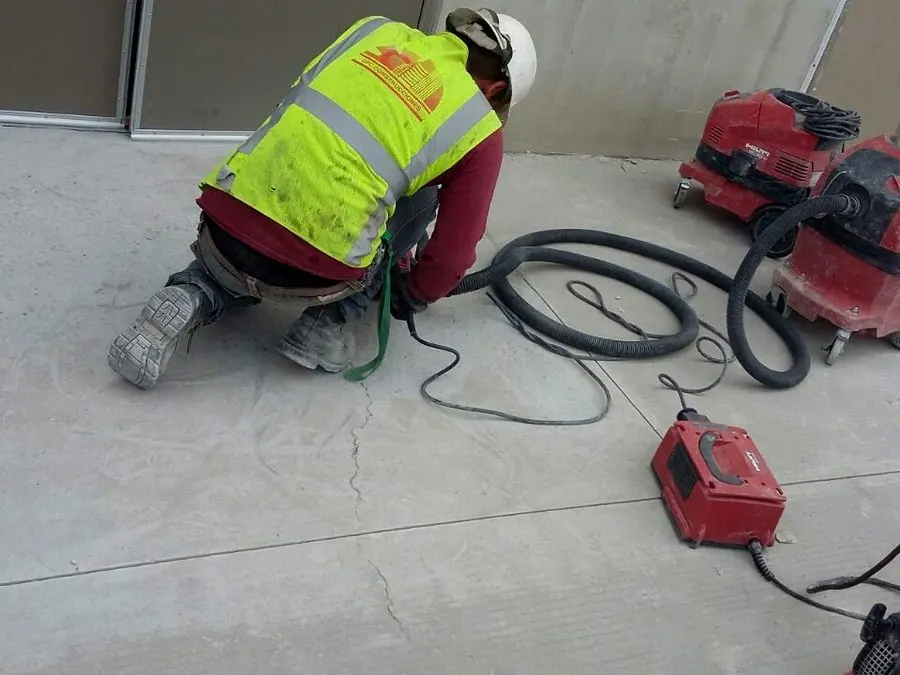
Preparation. Both systems start with mechanical grinding, and in both the most common failure comes from skipping it. Epoxy over laitance delaminates, and polishing over a slab that was never levelled leaves waves you can see in raking light.